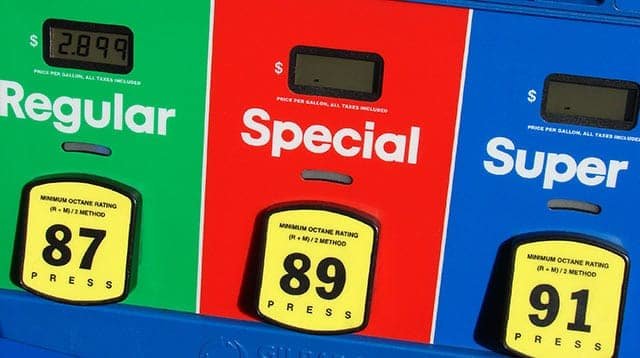
Gasoline has different octane ratings to meet the needs of your car.
The octane requirement of an engine varies with compression ratio, geometrical and mechanical considerations and operating conditions. The higher the octane number the greater the fuel’s resistance to ‘knocking’ or ‘pinging’ during combustion.
In Canada, octane ratings are displayed in AKI. In most areas, the standard grades are 87 (regular), 89 (mid-grade) and 91-94 (premium) AKI.
The recommended octane level for most vehicles is usually octane 87, but be sure to check your owner’s manual. Some car models have high-compression, high-performance engines, which are designed to utilize octane levels of 89, 91 or higher.
A higher octane gas won’t ignite as quickly, which explains why high-performance cars with high compression engines often require higher octane gas. Engines that take higher octane fuel tend to work more efficiently and emit less emissions and exhaust.
Because regular gasoline has lower octane, it is more prone to detonation. Burning regular in an engine designed for premium on a long-term basis or under heavy loads can cause engine knock, and that in turn can damage the pistons, valves or spark plugs. This may result in needing to replace the parts, and a trip to the Service Department.
Ordinarily, your vehicle won’t benefit from using an octane higher than your owner’s manual recommends.
So how do you know what to use? First, look inside the fuel door: premium-fuel cars usually have it indicated there. It will also be in your owner’s manual. If your engine makes a rattling or knocking noise, try moving up to a higher octane grade.
Some engines become more susceptible to detonation as they age, but if your vehicle doesn’t require premium, it isn’t pinging and it’s running fine, stick with regular. “Treating” a regular-grade car to a tank of premium when it doesn’t need it is simply a waste of money.